

Fire Damage Boarding Up in St Albans (AL) – Secure Your Property After a Fire
A fire is traumatic, and the aftermath can feel overwhelming. Even when the flames are out, a property can be left exposed—broken windows from heat and pressure, doors forced for access, damaged roofs, and unsecured shopfront glazing. If your home, flat, shop or commercial unit in St Albans has suffered fire damage, boarding up is often the first practical step to stop further loss and keep the site safe.
We provide fire damage boarding up in St Albans and across AL1–AL10. Our job is to make safe and secure the property after the emergency services have finished—helping you reduce the risk of theft, weather damage, and further deterioration.
Need urgent help now? Call 01727 326 204 for emergency boarding up.
Prefer email? info@boarding-up-stalbans.co.uk
When fire damage boarding up is needed (and why it matters)
Fire damage boarding up is most commonly needed when:
- Windows crack or blow out due to heat, pressure changes, or water impact during firefighting
- Doors are forced by emergency entry, leaving the building insecure
- Shopfronts or commercial glazing fails, exposing stock and the interior
- Roofs, skylights, or upper openings are damaged, allowing rain and wind in
- The property must be left unoccupied overnight or for several days while insurance and repairs are arranged
Even if the fire is “small”, the access damage can be significant. A single compromised opening can leave a property vulnerable to opportunistic entry—especially if the site looks obviously affected.
Boarding up after fire damage helps you:
- secure property quickly and reduce the chance of further loss
- limit weather ingress while longer-term repairs are organised
- create a safer perimeter for occupants, neighbours, or staff
- provide clear evidence to insurers of what was done and when
If you’re in immediate need, visit our emergency boarding up page or call now: Call 01727 326 204.
What happens after a fire in St Albans: a realistic timeline
Every incident differs, but a typical sequence looks like this:
-
Fire service attendance and sign-off
We only work once the emergency services have made the scene safe to enter. -
Initial assessment of openings and risks
We check which windows/doors are compromised, whether frames are stable enough for fixing, and whether there are hazards (loose glass, sharp metal, unstable surrounds). -
Make safe and temporary boarding
We board up damaged openings and, where needed, fit more robust temporary security options. -
Documentation for insurance and property management
We can provide itemised invoices and a clear work statement. When appropriate, we can also supply time-stamped photos of the secured areas for your records.
Because post-fire environments can be unpredictable, we don’t quote guaranteed arrival times. However, we prioritise urgent calls and will give you a realistic ETA on the phone.
How we secure fire-damaged properties (our approach)
Fire damage is different from a standard breakage because heat and water can weaken frames, crack brickwork, and distort doors. Our approach is practical and safety-led.
1) A safety-first assessment before we fix anything
Before we board up, we look for:
- Heat-damaged uPVC or timber frames that may not hold fixings
- Loose or shattered glazing that needs careful handling
- Distorted doors and jambs that may not close or latch
- Overhead hazards (soffits, skylights, roofing felt, loose tiles)
If the frame is too damaged for non-destructive methods, we’ll explain the available options before proceeding.
2) Window boarding after fire damage
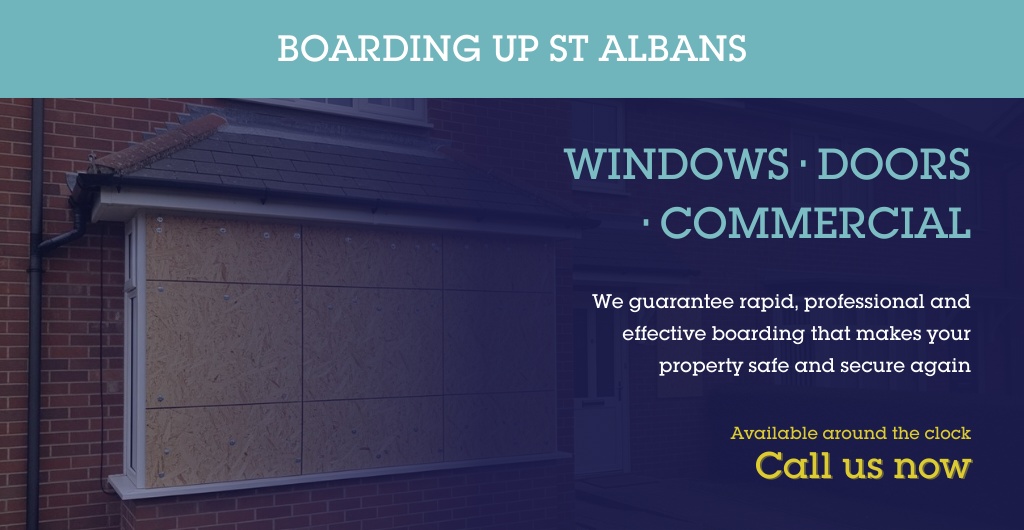
A common call is to board up broken window openings where glazing has failed or been removed. We typically use:
- 18mm exterior-grade plywood for stronger, more secure boarding (common for larger or higher-risk openings)
- 12mm OSB for smaller openings where appropriate, depending on exposure and risk
We use fixing methods suited to the substrate and the condition of the reveal—often with anti-tamper fixings where removal from outside is a concern, especially if the property will be unattended.
If you want to understand this service in detail, see window boarding in St Albans.
3) Door security: boarding up or temporary steel doors
After a fire, doors are sometimes forced, warped, or no longer secure. Options can include:
- Boarding up a door opening if the door leaf/frame is beyond immediate use
- Installing a temporary steel door when you need safer, repeatable access for loss adjusters, contractors, or building managers
A temporary steel door can be a good fit when the property needs to be entered regularly but must remain protected between visits.
Read more about door boarding in St Albans.
4) Shopfronts and commercial glazing
For retail and commercial sites, a damaged frontage is urgent. You may need the shopfront boarded up the same day to protect stock, equipment, and sensitive areas.
We can board large openings in a way that prioritises:
- security (reduced leverage points and robust fixing)
- safer edges and reduced risk to passers-by
- practical access requirements (where agreed)
See shopfront boarding in St Albans.
5) Roof, skylight, and high-level openings
Fire can compromise skylights, rooflights, or sections of roofline—sometimes due to heat, sometimes due to firefighting access. Where safe and accessible, we can board and weatherproof overhead openings to reduce rain ingress.
Learn more about roof boarding in St Albans.
6) What we don’t do (important)
To be transparent:
- We secure the property and help prevent further damage.
- We are not a fire restoration company and don’t provide smoke/odour remediation or full structural repairs.
- We are not loss adjusters or legal advisers, but we can provide documentation insurers typically ask for.
If you’re unsure what’s needed, call us and we’ll talk it through: Call 01727 326 204.
A typical fire-damage call-out in St Albans (example scenario)
A typical call-out might involve a residential property in the AL1–AL4 area where a kitchen fire has been contained, but the fire service has had to ventilate the home and force entry. The occupant may be staying elsewhere overnight, leaving the building vulnerable.
In that situation, we would usually:
- Confirm the site has been released and it’s safe to approach
- Identify any smashed window openings, cracked panes, or missing glazing
- Carry out a make safe—clearing obvious hazards around the opening where possible and boarding the vulnerable areas
- Secure damaged doors; if the main entrance can’t be reliably locked, we may recommend temporary boarding or a temporary steel door depending on access needs
- Provide an invoice/work statement and, where helpful, photos for the insurer or managing agent
Where fire damage has affected the frame or the surrounding masonry, we’ll explain what can be secured immediately and what may need a follow-up once a builder has stabilised the opening.
What to do right now after fire damage (practical steps)
If you’re reading this after a fire, focus on a few clear priorities.
-
Make sure everyone is safe
If there’s any immediate danger or risk of re-ignition, call 999 and follow the fire service instructions. -
Don’t re-enter until you’re told it’s safe
Fire-damaged properties may have hidden hazards: weakened ceilings, exposed electrics, sharp debris, and toxic residues. -
Take photos if safe to do so
Quick photos of broken windows, forced doors, and damaged areas can help with insurance later. Don’t put yourself at risk to document damage. -
Call your insurer as soon as possible
Keep a note of your claim reference and any instructions they give you. -
Arrange emergency boarding up / make safe
If the property can’t be secured, call us for emergency boarding up and we’ll discuss the best way to protect the site.
Call now: Call 01727 326 204
For urgent attendance outside normal hours, see emergency boarding up.
Fire damage and insurance claims: what we can provide
Most insurers want evidence of reasonable steps taken to prevent further damage. While every policy is different, we can usually provide:
- an itemised invoice
- a work statement describing what was secured and how
- time/date records and (where appropriate) time-stamped photos
- clear notes if an opening could not be secured due to structural instability
For more guidance, see insurance claims support. (We’re not loss adjusters, but we can help you keep your documentation tidy.)
Fire damage boarding up for homes, shops, and vacant properties
Fire incidents affect different properties in different ways:
- Homes and flats: immediate security, privacy, and weather protection; often needed the same day
- Commercial premises: securing stock, equipment, and public-facing frontages; often involves larger openings
- Vacant or void properties: increased risk of trespass after an incident; may benefit from more robust solutions beyond basic boarding
If you’re a landlord, managing agent, or facilities manager, we can discuss the most practical way to secure access while keeping the building protected. See relevant property information here:
FAQs: Fire damage boarding up in St Albans (AL)
How quickly should I board up after a fire?
As soon as the property has been released and it’s safe. A compromised window or door can lead to theft or weather damage quickly, especially overnight. If you need 24/7 boarding up, call: 01727 326 204.
Can you board up tonight (out of hours)?
Yes, we handle out of hours call-outs for urgent situations when a property can’t be left open. We’ll give you a realistic ETA on the phone based on current workload and travel.
Do you board up smoke-damaged windows even if they’re not broken?
If windows are intact but frames or locks are compromised, boarding may still be sensible. We’ll assess whether temporary boarding is necessary or whether there’s another way to secure the opening.
What if the window frame is melted or too damaged for fixings?
This can happen with heat-damaged uPVC or charred timber. If we can’t fix safely into the frame, we’ll look at alternative fixing points or discuss temporary solutions until a builder stabilises the opening.
Can you secure a door that won’t close after a fire?
Often, yes. If the door is warped or the frame is damaged, we may recommend board up door measures or a temporary steel door depending on how the property needs to be accessed.
Will boarding up stop rain getting in?
Boarding up significantly reduces exposure, especially when done properly with exterior-grade materials and appropriate fixing. However, severe roof damage or multiple openings may require additional weatherproofing steps. If the issue is overhead, roof boarding in St Albans may be more suitable.
Is boarding up covered by insurance after fire damage?
It often can be, but it depends on your policy. We provide documentation insurers typically request. For practical guidance, see insurance claims support.
Can you board up a commercial shopfront after fire damage?
Yes—this is common when heat or impact has compromised the frontage. If your shopfront boarded up is urgent to protect stock and premises, call us and we’ll prioritise the risk level. You can also read about shopfront boarding in St Albans.
Need fire damage boarding up in St Albans?
If your property has been affected by fire and you need to make safe a window, door, shopfront, or roof opening, we’re here to help across AL1–AL10.
Need help now? Call 01727 326 204 for immediate assistance.
Or email: info@boarding-up-stalbans.co.uk.
